

by Johnathon Wilkins • photography by Hunter Norris
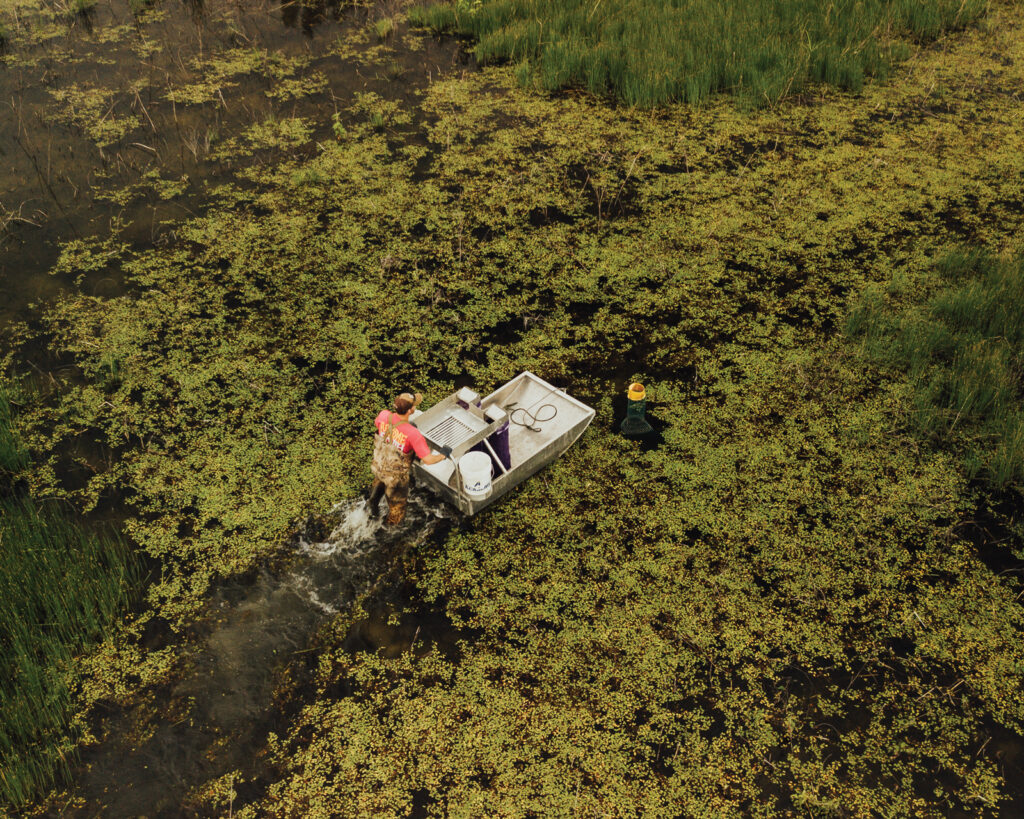
When one thinks about the Mississippi Delta, catfish, Delta blues and neat rows of commodity crops are often the first things that come to mind. Generally, crustaceans aren’t at the top of the list when discussing that region of the state, but the Mississippi Crawfish Company (MCC) aims to change that perception with its innovative, boutique approach to the native decapod from which the business derives its name.
Passion is a term that’s thrown around to the point of cliché, but it’s absolutely the word that comes to mind when I think of Jason Roberts, founder of the MCC. Jason is a lifelong Mississippian who was raised in Madison and returned there after completing his degree from Mississippi State in Starkville.
Roberts began his professional career as a restaurant franchise owner, managing locations in both Starkville and Oxford, but came to aquaculture through his ties to the land as a lifelong outdoorsman and hunter. Roberts cut his nature-loving teeth on a family property bordering the Big Black River near Vaughn, and it was his duck-hunting exploits there that led to the eventual development of the Mississippi Crawfish Company.
It was that family connection and the social aspect of crawfish that initially attracted Roberts to the pursuit. He explains, “I’m passionate about crawfish because of what they represent. Crawfish are delicious, but it’s more than that. Crawfish boils are gatherings that are always about having a good time.”
In his thirties, Roberts began setting traps and harvesting crawfish in the same duck holes where he and his family pursued mallards, gadwalls, and wood ducks during the colder months. Waterfowl and crawfish exist on the landscape in a state of symbiosis. Rice or millet planted in flooded impoundments attracts ducks during the winter hunting season. Crawfish emerge from their protective burrows in the mud during the spring harvest season to feed on invertebrates that depend on that decaying matter.
In summer, the impoundments are drained to be planted again, causing the crawfish to burrow back into the protective security of the leaves and muddy bottoms, waiting for their turn to reemerge the following spring. Roberts became aware of this cycle and started collecting crawfish from his family’s duck ponds as a fun springtime activity, and the pursuit quickly became a mainstay in his life.
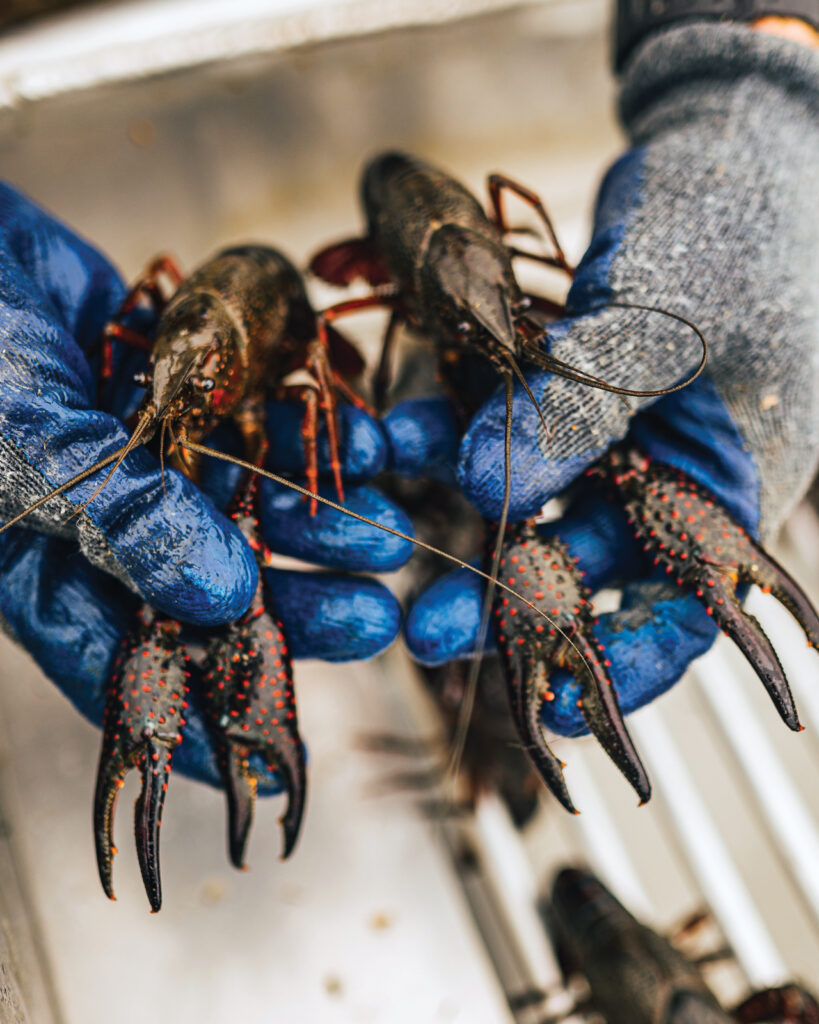
That’s where the passion came in. Roberts can tell you everything you’d ever want to know—and more—about Mississippi’s terrestrially adjacent crustaceans. I’ve spent days with him slogging through ponds while he showed me the difference between a Red Swamper and a White River crawfish, neither of which is the type that makes the ubiquitous funnel-shaped chimneys you may come across in your yard. Those are Coffin Cutter crawfish, named because of their propensity to dig many feet into the earth.
Jason can relate the breeding cycle of the species, describe their molting and growth patterns, and even demonstrate how they collect and redistribute calcium deposits to form their protective exoskeletons. It was that passion that led him from gathering crawfish on his family’s hunting property to the initial purchase of long-defunct catfish ponds in Belzoni, allowing him to grow his operation into the unique commercial enterprise that exists today.
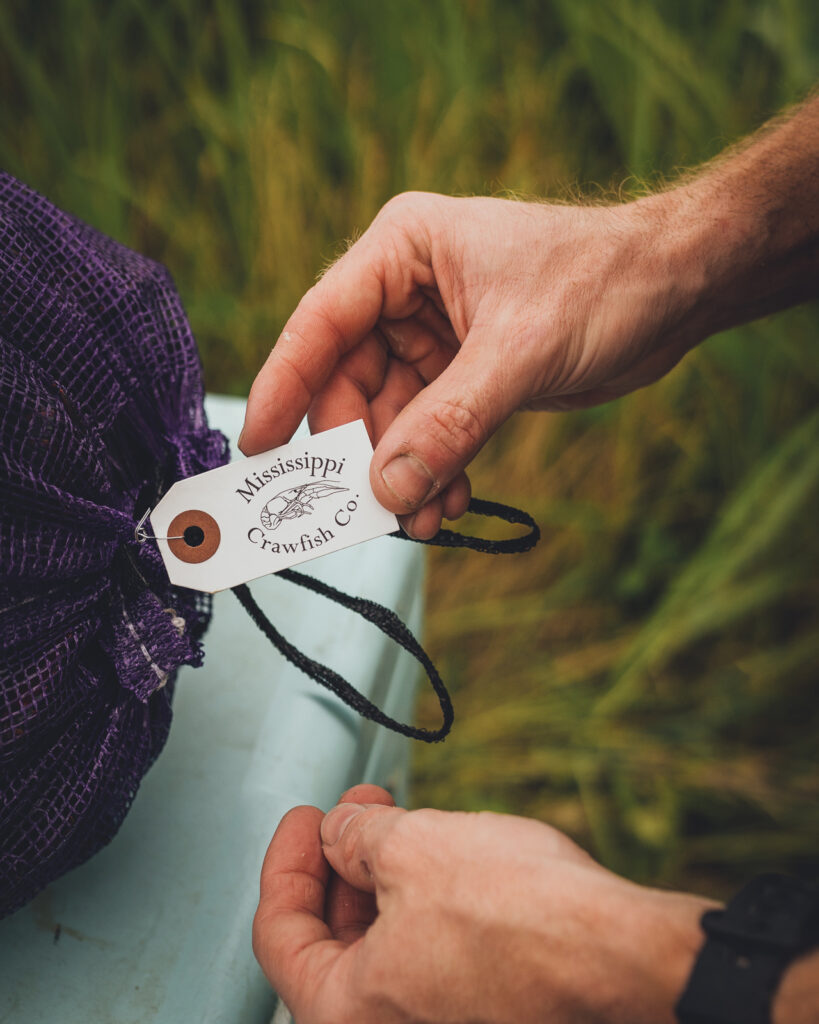
For the first few years, every mudbug purchased from the Mississippi Crawfish Company was gathered by hand by Jason. Roberts would spend spring mornings wading through shallow Delta ponds, pushing an aluminum boat as he engaged in the repetitive work of checking and rebaiting traps, sorting crawfish by size, and dodging the occasional cottonmouth or territorial beaver. In doing so, he accumulated miles of hard-earned steps in ponds the size of football fields while sloshing back and forth in gridlike patterns.
He would do all of that before repairing equipment or tallying payroll at his restaurants, still making it back to Madison in time to pick up his twin daughters from school. He did it because he loved the work itself and because he enjoyed seeing his passion grow into something tangible.
Now, he has taken another step to expand the business by partnering with multigenerational farmer and agricultural land management expert Drew Burton to take the Mississippi Crawfish Company to yet another level. When asked why he was interested in joining the business, Burton said the concept immediately appealed to him as a third-generation row crop farmer and because of the opportunities it could provide the agricultural sector.
“The idea of bringing a new alternative of farming to our area—to allow other like-minded farmers to grow and sell crawfish to diversify their operations—made me go all in.”
That belief led the partners to procure an old car dealership in Belzoni and convert it into a hub and distribution center for the MCC. There, with the help of Jason’s father, Billy, who brings more than fifty years of professional business experience to the mix, these three gentlemen are poised to become the new face of Mississippi Delta aquaculture.
They have purchased additional long-vacant catfish ponds, converted them into crawfish production sites, and coordinated with other local farmers to spread the good word about crawfish. From their Belzoni hub, they are able to receive, process, and distribute crawfish for commercial customers and private consumers alike.
They also retail crawfish traps and bait so other local operators can harvest crawfish from their farms and sell them back to the MCC. By employing local Delta residents for work both in the fields and at their commercial headquarters, they are bringing jobs and revitalization to an industry—and a region—that needs both.
Roberts and Burton are touting the virtues of their product as a local, sustainably harvested, and—because of Mississippi’s more northerly location—more seasonally available alternative, with a longer harvest window than the commonly considered Louisiana counterpart. The Mississippi Crawfish Company has sacks available well into June, long after Louisiana operations have had to halt harvest due to the heat.
The MCC is also developing the ability to produce a specialty product: soft-shell crawfish. By taking advantage of the crustacean’s natural growth process and tendency to molt its protective shell, the company is able to offer what has historically been a regional delicacy to a broader market for the first time.
Roberts has spent several years experimenting with the best methods for doing so and, looking ahead to next season, has finally developed a process that—though labor-intensive—will be ready for market in the 2027 season.
What’s emerging from the Mississippi Crawfish Company isn’t just a business, but a way of life built around the rhythms of the Delta. For Roberts and Burton, it’s about more than harvest seasons and distribution channels—it’s about bringing people together over something local, familiar, and rooted in place, while honoring their commitment to agricultural diversification and sustainability. In their view, crawfish aren’t just a product of the land, but a reason to gather around it, and a reminder that even traditional agriculture can evolve into something both modern and deeply communal.
For more information about the 2027 season, visit mscrawfishco.com or follow on Instagram, @mscrawfishcompany, and Facebook, Mississippi Crawfish Co.

One Response
That was an interesting and beautiful story. I think we need more stories like this because we didn’t even know that existed in Mississippi. I know they have a restaurant crawdads in Marigold, but I never knew what they probably got their crawfish and more than likely they get it from Mississippi. To read a recipe about how to cook crawfish thank you.