

Jim Abbott spent a lifetime chasing the truth—and changing the face of journalism in the Mississippi Delta
by Marilyn Tinnin • photos courtesy of Jim Abbott
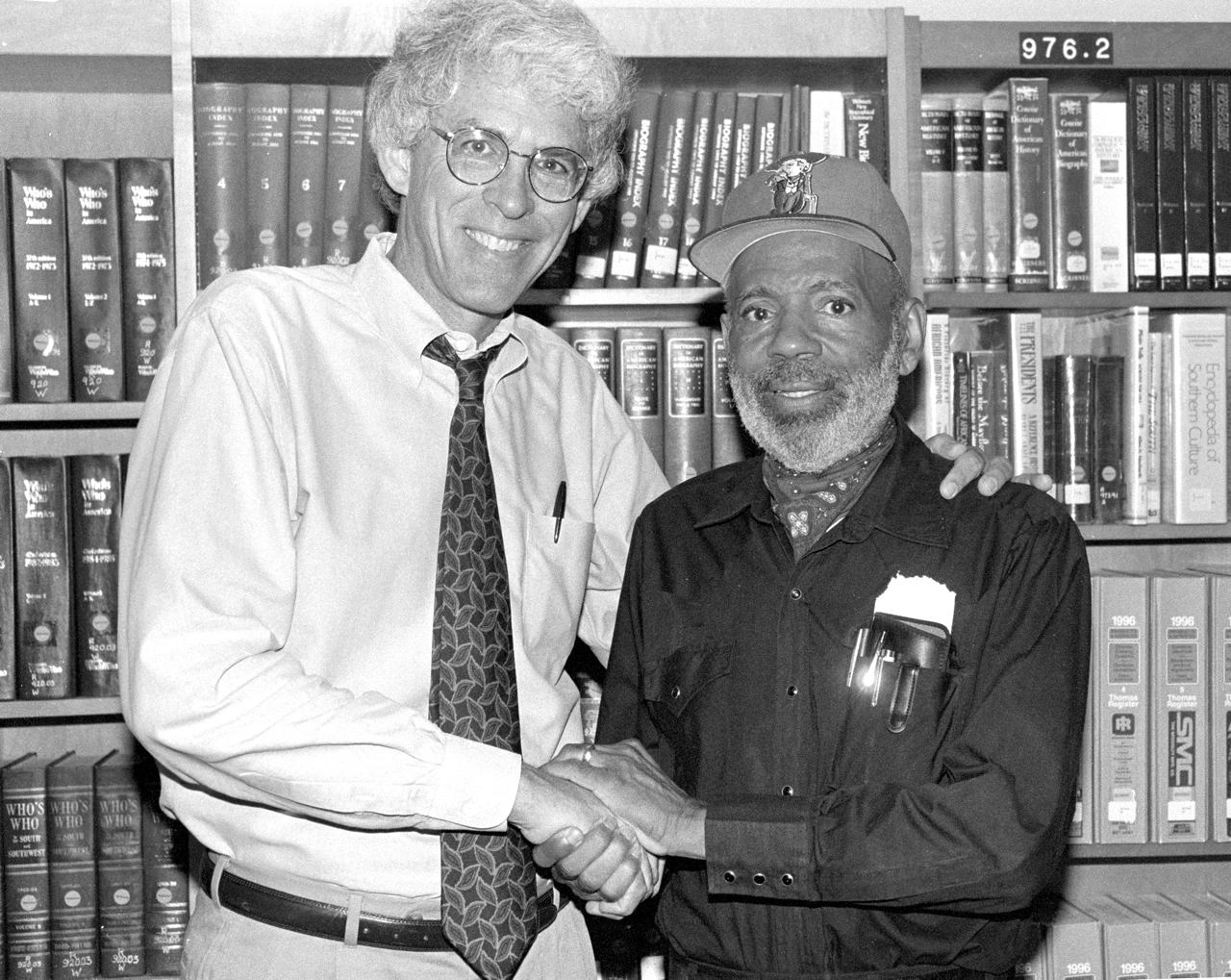
He was eighteen. The red-and-blue beanie that covered his shaved head was a humiliating freshman rite of passage on the Ole Miss campus in September 1962.
James Meredith was attempting to enroll as the university’s first Black student. John Fitzgerald Kennedy, the President of the United States, had ordered federal marshals and National Guard troops to campus to quell the resistance.
The eyes of the world were on Oxford. Until then, it had been a sleepy little town in North Mississippi, known primarily for the University of Mississippi’s football team, which had begun winning national titles, and as the home of famed author William Faulkner, winner of the 1949 Nobel Prize in Literature.
Jim Abbott watched the drama unfold as the crowd cheered on Mississippi’s governor, Ross Barnett, who would defy federal law enforcement and block the doorway as Meredith attempted to register. Abbott, along with a large crowd of fellow students, shouted, “Two, four, six, eight, we don’t want to integrate.”
It was not his finest hour, but with that story he begins his 302-page memoir, Paper Man: Chasing the Truth in the Mississippi Delta. Released in early September and published by Nautilus Publishing Company of Oxford, Paper Man is the compelling perspective of an older, wiser man who was once a good ole Mississippi frat boy protesting Meredith’s enrollment.
A Greenwood native, Abbott was twenty-six years old, a young husband, father, and Vietnam veteran in 1970 when he moved to Indianola to become the youngest newspaper editor in the state. As editor of the Enterprise-Tocsin, the local weekly with a storied history dating back to 1888, he was wide-eyed, creative, and bursting with energy, ideas, and skill.
He had also arrived while the sparks of racial tension that had begun in the summer of 1964 still simmered. Indianola, though charming and welcoming in many ways, supported a community newspaper that ignored about half of the city’s residents.
In the eight years between the Meredith debacle and his arrival in Indianola, his life experiences had turned his childhood-ingrained views on race upside down. Summer jobs in Wyoming and California led him to reconsider opinions he had adopted years earlier.
In 1966, his senior year at Ole Miss, Senator Robert Kennedy addressed the student body in the new Tad Smith Coliseum, where the seats had yet to be installed. Abbott, who had reviled the senator’s brother, President John Fitzgerald Kennedy, a few years before, sat on the concrete floor with hundreds of students and was moved by Robert Kennedy’s speech. He did not expect to be.
Soon after earning his business degree and taking a job in advertising in Natchez, Abbott was called to active duty in Vietnam. As part of the United States Army Reserve’s 173rd Quartermaster Company, based out of Greenwood, active duty was not in his plans until it unexpectedly was.
This was 1968, when the Lyndon Johnson administration began calling Reserve and National Guard units to active duty in response to the military situation following the Tet Offensive.
After a ten-month stint in Vietnam, he returned to Mississippi and to Ole Miss to earn another degree. This time, it was a journalism degree to go alongside his business degree. Abbott took every journalism course offered, wrote and took photos for the campus newspaper, the Daily Mississippian, and absorbed every nugget of journalistic skill available to him.
One of his final classes was a graduate-level sociology course taught by George McLean, editor and publisher of The Tupelo Daily Journal. As Abbott says in his own words, “That experience would change my life.”
McLean encouraged students not to flee their home state to make a name for themselves in bigger markets, but to stay in Mississippi and make a difference in their own backyards. McLean’s message resonated with Jim Abbott. He was just enough “crusader” by nature to take hold of McLean’s words and make them his passion. He would not leave Mississippi.
In the foreword to Abbott’s book, Will Norton Jr., former Dean of the School of Journalism at Ole Miss, says, “Abbott could have been on the staff of any of the elite newspapers in America, but he loves Mississippi. He published the kind of stories that a big city newsperson would publish. However, unlike a big city editor he would see those he wrote about in the grocery store or at a restaurant.”
That was often a prickly situation for an investigative reporter, to say the least. But it was compounded in a town of 9,000 where everybody knew everybody and change was not a popular word.
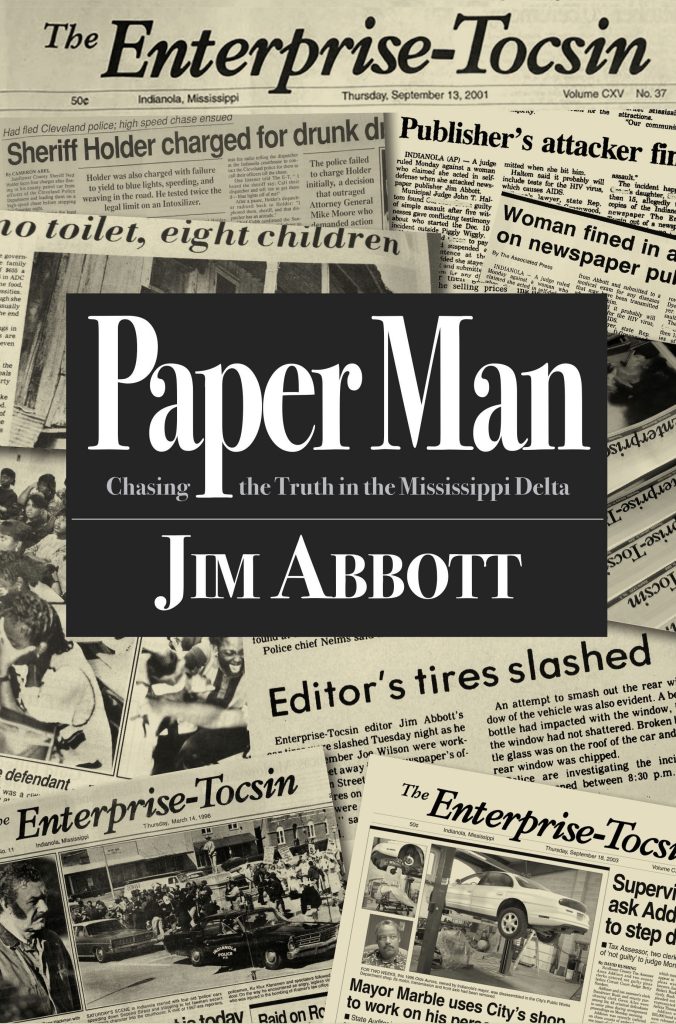
Before Abbott’s arrival, The Enterprise-Tocsin’s front page featured the “Yard of the Month” and carried inside columns about bridge clubs, vacations, and women who took afternoon shopping trips to Greenville. The paper had never covered city board meetings, county government issues, or anything else considered “hard news.” Abbott wanted to replace those fluff stories with coverage of city government, court trials, and impactful reporting on issues that affected the public. Not everyone was thrilled.
Abbott knew he had his work cut out for him.
He rolled up his sleeves, assessed his challenges, and went door to door in the business community, introducing himself and laying out his vision for a vibrant newspaper. Many embraced him, while others treated him coldly when he talked about the Enterprise-Tocsin’s role in serving the whole community. Tocsin, in case you are curious, is an ancient word for an alarm bell. The Enterprise-Tocsin had not sounded any alarm bells for decades. Many readers would say Abbott was the alarm bell that changed everything.
From contentious school board appointments to business boycotts and an incognito look of Parchman Penitentiary, Abbott and his small staff covered everything. His investigative reporting did ruffle some feathers, but some feathers probably needed some ruffling!
Abbott succeeded in elevating the once-mediocre paper into one of the best weeklies in the entire Mississippi Press Association’s (MPA) membership, as evidenced by his numerous awards over the years. A past president of the MPA, Abbott is also a member of its Hall of Fame and the recipient of a Silver Em Award from the University of Mississippi’s School of Journalism.
Abbott’s memoir is full of personal stories, some hilarious and some poignant. His deep friendship with Indianola’s native son, B.B. King, is a thread that speaks volumes about Abbott’s positive influence on his city and his genuine love and appreciation of people.
One enjoyable story among many is Indianola’s 1983 “Garden Party,” honoring B.B. King at the home of prominent sisters Christine Swartz and Jessie Lee. The event was a year in the planning with 300 guests, half white and half Black. The small committee working together was “tight-lipped and secretive,” Abbott says. As the evening approached and word leaked, media requests began to flood the Enterprise-Tocsin office. “No media, and no cameras” remained the firm policy as Abbott delivered an unequivocal no to even the most prestigious publications.
A reporter from the New York Times managed to drop by without a camera at the end of the evening, and ran a 1,400-word story on the front page of the New York Times a day later.
The story brought national attention—all positive—to the city that had been labeled “Segregation City of the Nation” a decade earlier.
In the final paragraphs of a most enjoyable read, Abbott reflects on his career with candor. “Looking back, I realize I had no interest in playing golf, going fishing or hunting. The newspaper was where I belonged with the enjoyment of talking to people, from civic leaders and business owners to schoolteachers and principals to preachers to coaches to politicians to convicted criminals to artists and musicians to librarians to octogenarians and wide-eyed youngsters. And taking photographs of them and life in Sunflower County. I wanted to provide a quality newspaper which the citizens deserved.”
Well done, Jim Abbott. You did just that.
The Paper Man is available at independent bookstores across Mississippi.