
By JIM BEAUGEZ • Photos courtesy of SCALARIA
Morgan Freeman’s Symphonic Blues Experience is taking the sound and musicians of the Mississippi Delta to concert halls around the world.

The steps leading into Clarksdale’s Ground Zero Blues Club, cheekily given the postal address “0 Blues Alley,” are the entryway to the living heartbeat of blues music for aficionados and tourists who visit the Mississippi Delta.
Inside the former cotton warehouse, where the products of sharecroppers’ toil once awaited shipment to far-flung locales on the Illinois Central railroad, local bluesmen like Anthony “Big A” Sherrod and James “Super Chikan” Johnson perform the blues—music conceived to acknowledge and then forget the hardscrabble realities of plantation life.
Blues music, in its purest form, has little to do with orchestral or symphonic instruments or arrangements. It came up from field hollers and broke loose in juke joints before riding the rails to destinations like St. Louis and Chicago, not from the gilded decor of a concert hall.
But now the blues is set to make its way into hallowed performance theaters internationally, where the music of the Delta will take on a new shape, surrounded not by the low ceilings and neon lights of juke joints but by strings, brass, and a famous narrator whose voice carries the gravity of the past.
Morgan Freeman’s Symphonic Blues Experience, a new touring ensemble, reframes the music that shaped rock, soul, and hip-hop in the language of symphonies and cinematic storytelling. The project, which pairs orchestrated versions of Delta blues with narration from the Academy Award-winning actor, is traveling to more than 20 cities for its inaugural season in an effort to carry the legacy of the Delta far beyond the state line.
“It exposes the music to audiences that can’t get to Clarksdale,” says Freeman, also a founding co-owner of Ground Zero, whose connection to the blues has made him the voice of the Delta and its cultural traditions. “But the other piece of it is the way we’ve crafted this program. It shows the influence of this music over the last hundred years.”
But just as the blues evolved into modern genres like rock and roll, R&B, and hip-hop, this interpretation of the blues doesn’t rely on nostalgia. Opener Robert Johnson’s “Cross Road Blues” sets the tone with one of the genre’s most mythologized figures, while Freeman’s narration connects the songs, adding context, memory, and a sense of continuity. Video projections tell part of the story, too, landing somewhere between a documentary and a concert, stitched together in real time.
“We are blessed to have Morgan’s cinematic narration, which provides a powerful bridge between the songs and eras,” says Eric Meier, a partner in Ground Zero and a producer of the project. “This is so much more than a concert. It’s a visual feast married with some of the best music on the planet, and the result exceeds what we ever imagined.”
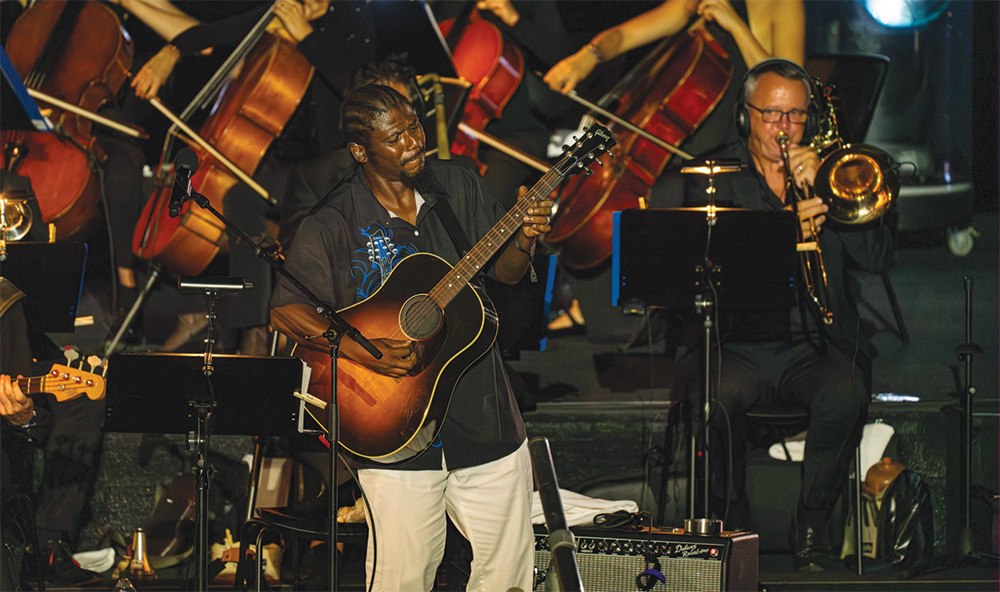
The show’s arc follows the music’s own migration from Delta fields to Chicago clubs and from acoustic slide to electric howl to gospel to present day. The setlist, as Meier explains it, moves through periods highlighting the long-lasting impact of this genre throughout modern-day music. It also includes original songs by Clarksdale’s own Sherrod, who fronts the group and travels with the tour, joining local symphony orchestras at each stop—all the way from Central Park in New York City to concert halls in San Francisco, Chicago, Kansas City, Nashville, and Portland, Oregon.
“We’ve got about fifteen different blues artists over the course of the next two years,” says Meier. “Big A will be leading this off, but the goal is to really utilize a lot of talent from the Delta.”
While the concept of pairing blues music with orchestral arrangements had been explored decades ago, this is the first large-scale project to put the blues at the center of the symphonic stage while also telling its story and cultural impact. That distinction matters to Howard Stovall, who co-founded Ground Zero alongside Freeman and the late Bill Luckett in 2001, and whose family once owned the Clarksdale building where the club opened its doors.
“I think it’s certainly the first time that it’s been done in a way that tells the story of the blues while blending the two genres,” Stovall says. “Eric had a vision that we started working on, and this thing has, over a year and a half, two years, really evolved into this major narrative art project.”
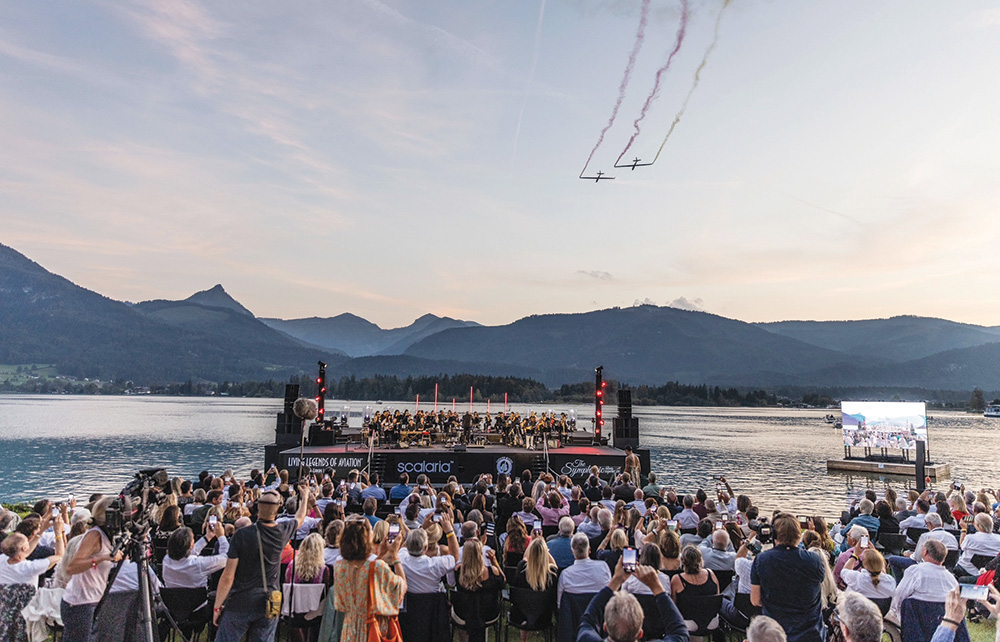
The concert tour has its origin in performances they piloted in Savannah, Georgia, as well as overseas in the Austrian city of Salzburg, in Dublin, Ireland, and in Salvador, Brazil, between 2022 and 2024. But its home remains firmly in the Mississippi Delta. It was built with local artists in mind, and a portion of the proceeds from the tour benefits the Ground Zero Arts Foundation, a nonprofit that aims to support musicians from the region through education and business resources.
“It’s a new organization that’s going to raise money to support local artists,” Meier says. “But they’ve got to be artists that are from the Delta, as opposed to visiting musicians.” Stax Music Academy in Memphis has also joined the effort, contributing both recorded vocals and live student performances to the concerts.
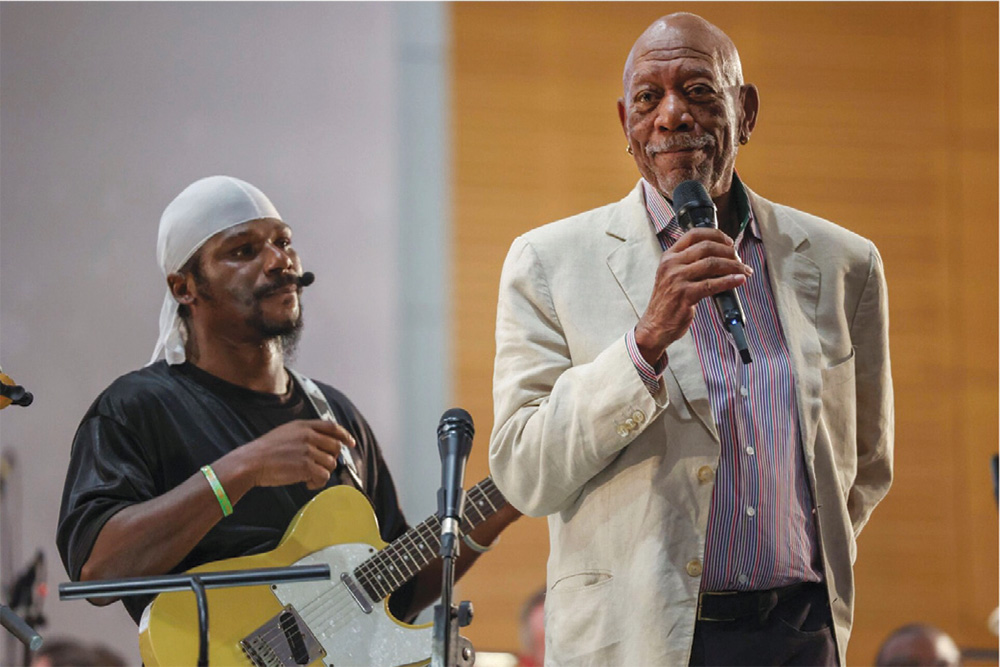
For Freeman, who has long served as an unofficial ambassador for Mississippi’s blues culture, the project builds on the work he began more than two decades ago in Clarksdale. Ground Zero Blues Club, which he helped open in 2001, gave a professional stage to local musicians who might otherwise have been passed over or forgotten. It became a reliable stop for tourists and blues pilgrims and also a steady paycheck for regional players.
“I didn’t really appreciate [the blues’ reach] when I got involved with the club,” Freeman says. “But then when you really look from a historical context or even modern-day listening, you realize how it’s integrated into really all forms of music.”
The production aims to mirror that integration, layering the intimate grooves of a rhythm section with the broader sweep of fifty to seventy-five orchestral musicians. “It just brings a much richer experience,” Meier says. “I would contend that these performances are more immersive. You have the emotion of the blues and the richness of the symphony, which to me is a very unique combination.”
At the heart of the show is the idea of migration—not just the physical journey of Black Americans moving northward, but the movement of the blues itself through generations and genres. “This is kind of like a great American story that probably never should have happened,” Meier says, “if it wasn’t for the workforce migration, if it wasn’t for the British rockers starting out as blues cover bands, if it wasn’t for the breadth of R&B.”
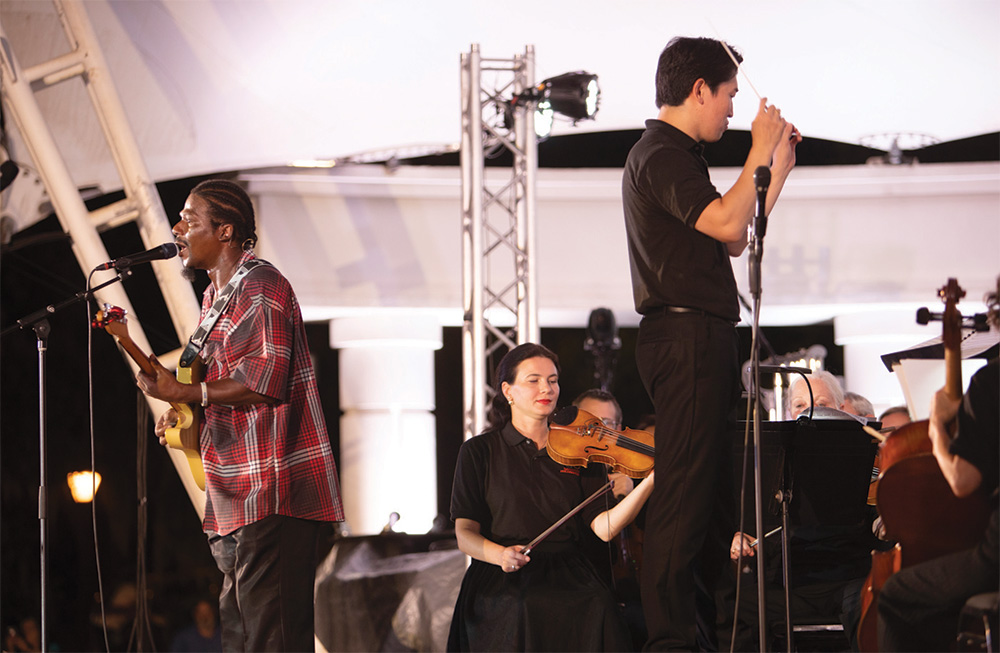
Stovall sees the tour as a way to fulfill a goal that’s long been out of reach: exporting the soul of Clarksdale without losing its center. “We’ve always wrestled with how to expand Ground Zero’s mission outside of Clarksdale, and we’ve come to the conclusion that it’s very hard to do that with a club,” he says. “But this project gave that vision legs. We can take not only the story of Clarksdale, but really a very broad blues story, and put it in front of an audience—especially a symphonic audience—that may not know that narrative at all.”
The orchestras, for their part, have been quite receptive. Many are looking to attract younger and more diverse audiences, and the blues, grounded in struggle and expression, offers a way in. “Symphonies are looking to reach new audiences,” Meier says. “And the blues and this performance provide that vehicle.”
Still, there’s no pretense that this version of the blues replaces the real thing. And it’s not trying to. It’s simply an extension, another way to tell the story, to show where the music and culture came from and where it’s still going. To paraphrase Freeman, it’s about celebrating those who turned hardship into something powerful and who sang out loud when the world tried to keep them quiet.
“It’s the kind of cultural experience you can’t find elsewhere,” Meier says. “And that’s the beauty of the Delta. Unabashedly authentic.”
Learn more at symphonicblues.com.