

BY JIM BEAUGEZ
Cleveland native Will Tims sets his Delta roots in Midcoast Maine, where he renovated and reinvented a historic inn with a story of its own
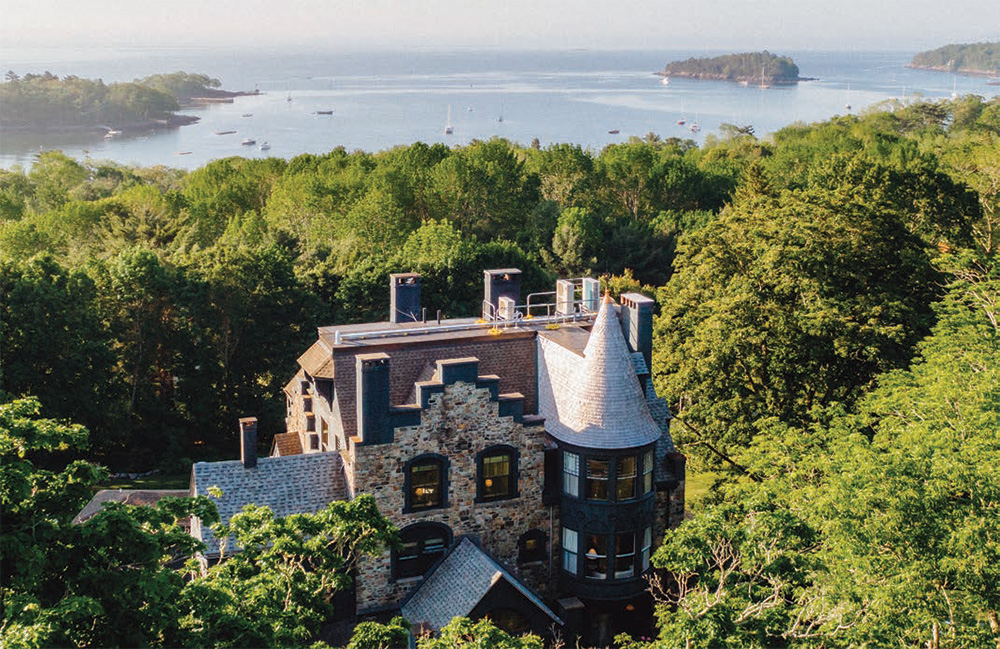
Just inland from Penobscot Bay on the rugged central coast of Maine, a turreted stone mansion rises among the hills along state Route 1. Long regarded as a local curiosity by residents and visitors of the picturesque New England town Camden, the property known as Norumbega has been a visual outlier since it was built in 1886.
And that’s exactly why the home caught the discerning eye of Will Tims.
“Architecturally, it’s just so distinctive and different from literally almost everything else you find on the coast of Maine,” says the Cleveland, Mississippi native, an architect by trade who purchased and renovated the mansion with partner Brett Haynie in 2022.
And the duo’s work hasn’t gone unnoticed—Travel + Leisure readers voted the Norumbega their favorite inn in the continental U.S. for 2025, after the magazine’s editors ranked it as No. 4 in the 2024 World’s Best Awards.
Tims developed his eye for aesthetics and design from the back of a family station wagon on cross-country family vacations. “As much as my parents wanted us to appreciate where we were from, they also wanted us to have our eyes open to the world,” he says. During summers, his parents took the family on road trips across the United States, and later, their travels abroad exposed Tims to environments both classical and exotic.
He took that broadened scope into the field of architecture during his studies at the University of Virginia, surrounded by buildings designed by Thomas Jefferson. He then pursued a master’s degree at Yale before decamping to New York City, working first at small architecture firms and later as a design consultant for real estate developers. He eventually earned his architectural license and managed large-scale projects in Chicago and at Disney World. But despite the prestige of the projects he worked on, Tims began to feel constrained by the limits of client-driven architecture.
“I slowly but surely started feeling like there’s certain aspects of architecture that I love and I will always love, but the more I was working as an architect, the more I started to think maybe this is not what I want to do for the rest of my life,” he says. “As the architect, you’re focused on client service, and ultimately they are the decision maker. I wanted to figure out a way that I could still be involved in architecture and design but have more control over the decision-making process. And so I slowly transitioned into real estate.”
For more than sixteen years, Tims worked as a consultant and later as a design director for a real estate developer to help bring major residential and hotel projects to life. Working through the COVID pandemic and into 2022, he had completed some of his most ambitious projects. “Honestly, once I had finished those projects, I felt like I had accomplished what I had set out to do, and I felt burnt out by it,” he says. “I didn’t want to just keep doing the same thing over and over again.”
That restlessness led to his discovery of Norumbega. Built by Joseph Barker Stearns, the inventor of the double telegraph, the 13,000-square-foot manse—known locally as simply “the stone castle by the sea”—stands on a four-acre plot in the Appalachian foothills. Stearns, who declared Camden the most beautiful place in the world, had hired New York architect G.B. Jennings to design the residence. He equipped the house with the latest innovations of the day, including electric lights and steam heat, and its design drew inspiration from the grand properties Stearns visited while selling telegraph licenses in Europe.
“Western Union sent him to Europe to sell licenses of the invention, and when he was there, he was staying in manor houses and estates, and I believe he took that inspiration and brought it back,” Tims says. “He was very much influenced by the architecture in Europe.”
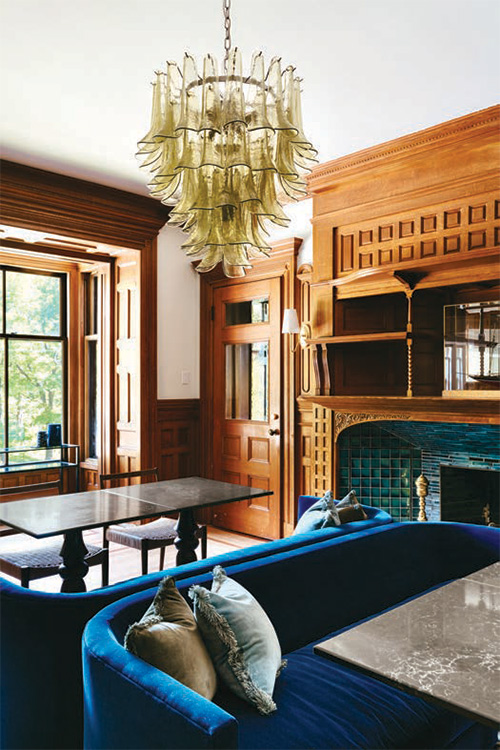
Tims and Haynie looked at properties across Maine, but Norumbega immediately stood out. Its Queen Anne Victorian style, characterized by intricate millwork of pre-Industrial craftsmanship, spoke to Tims’s own design sensibilities. “It was built during a time when designers were doing a lot of stuff just for the sake of beauty. The millwork in the house is incredibly ornate, and there are flourishes in the work you wouldn’t necessarily find in a house built 30 years later. The level of craftsmanship is very high.”
When they acquired the home, Norumbega was structurally sound but had grown “tired” over the decades. Furniture dated to the 1980s, interiors needed updating, and mechanical systems required modernization. Tims applied both his architectural expertise and his eye for aesthetics to complete a comprehensive renovation. All guest rooms received new bathrooms and heat pumps, the kitchen and bar were rebuilt, the terrace roof replaced, and the entire interior was refurnished.
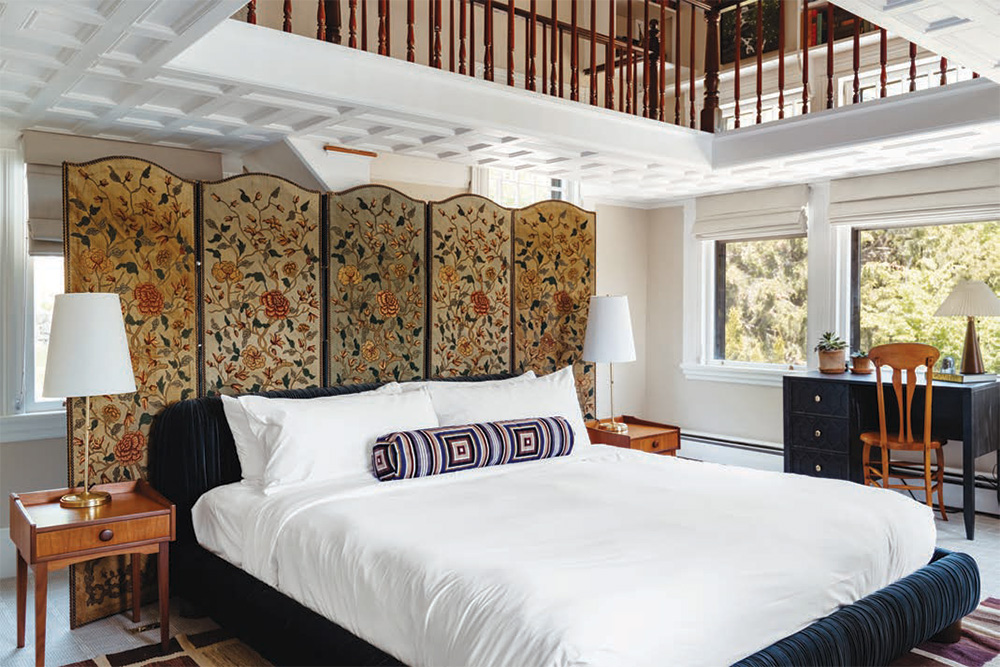
“We took a little inspiration from Stearns,” Tims says. “I loved this idea that he traveled to Europe and that clearly influenced the design of the house he built. We liked that idea that the muse for the design was a global traveler who had an appreciation for interesting things you could pick up all over the world and bring back to this special place in Maine. It gave us permission to bring in all these different influences.”
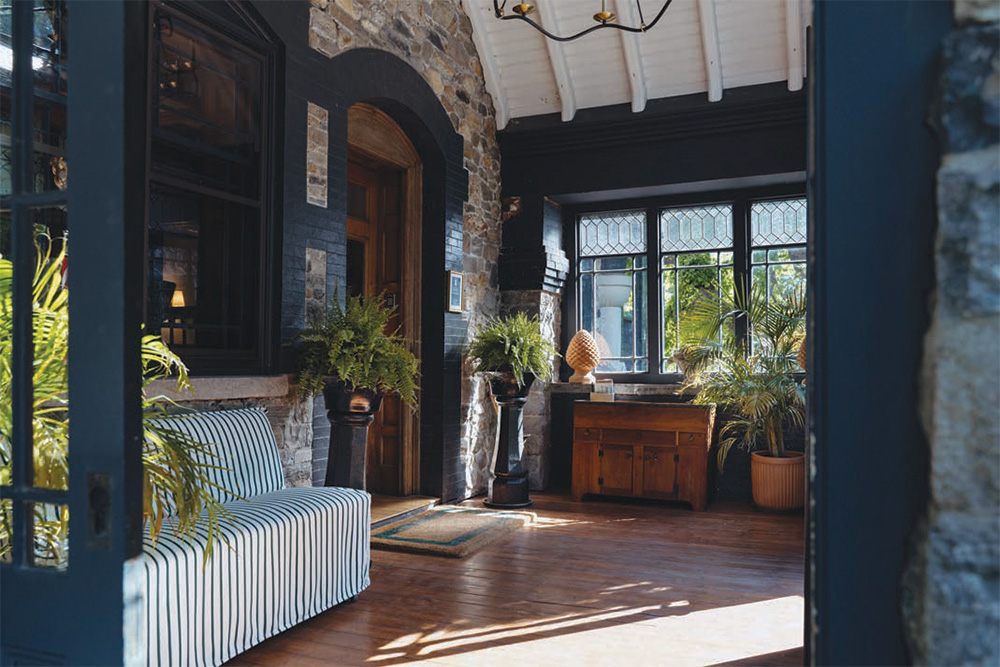
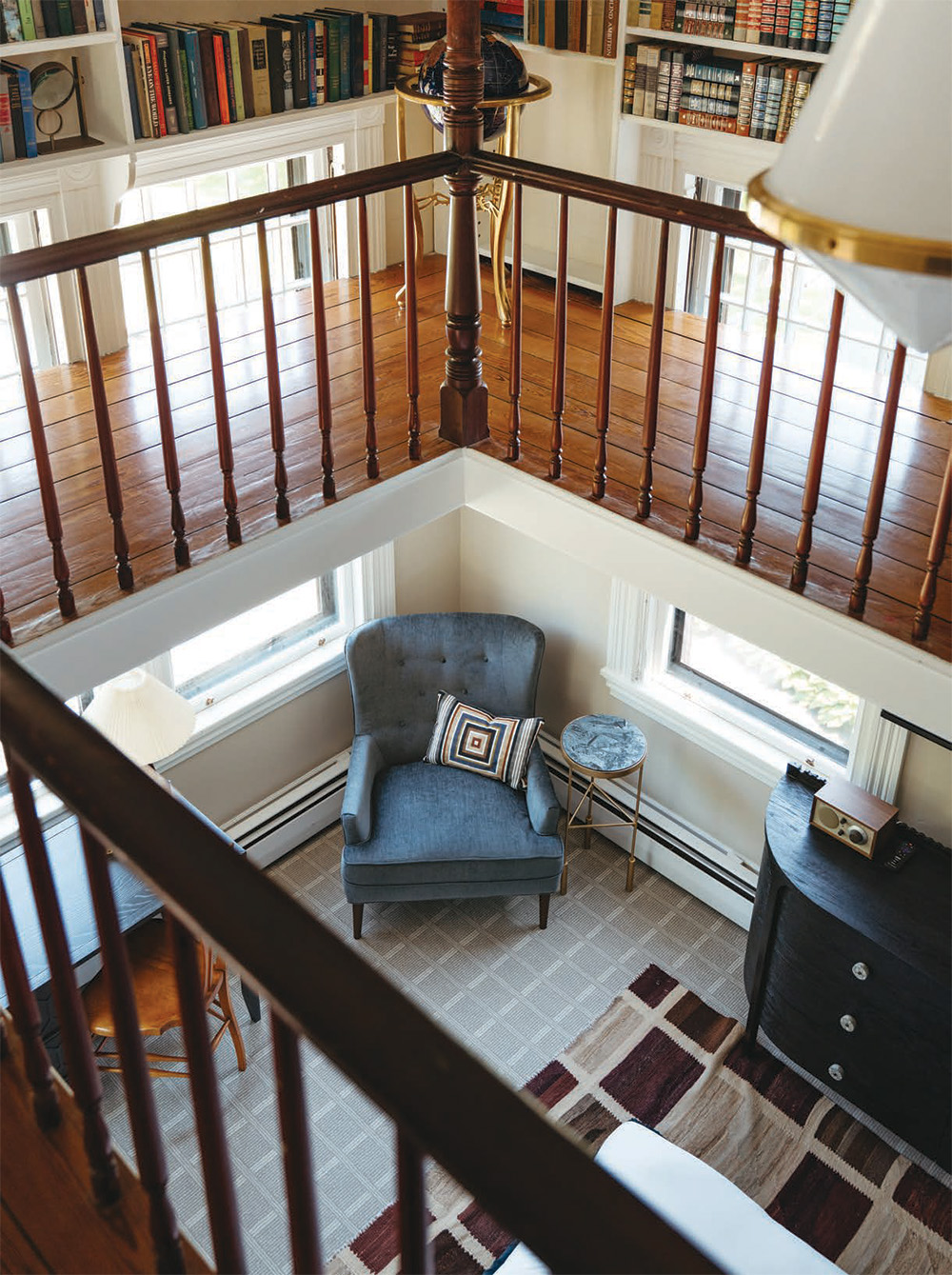
That eclectic approach is central to the guest experience at Norumbega. Tims mixes Mid-Century Modern pieces with antiques, Asian and Italian influences, and Maine-sourced vintage rugs and art. The goal is a layered, curated feel, one that communicates history and personality rather than sterile perfection.
“I’m a very visual person, so I believe in the power of beauty and making something that lasts a long time,” he says. “But I’m also very practical. I like things that work and function the way they’re meant to. And also, I think I’m a problem solver at heart.”
With just 11 rooms, today The Norumbega Inn provides guests with a boutique-getaway experience, and Tims made design choices that preserved autonomy while fostering a sense of community. Coffee machines are placed on each floor rather than in individual rooms, encouraging guests to move through shared spaces. Homemade cookies are served in the lobby rather than delivered to rooms, inviting small social interactions. These decisions are practical but intentional, reinforcing a Mainish sensibility of independence, hospitality and thoughtful service.
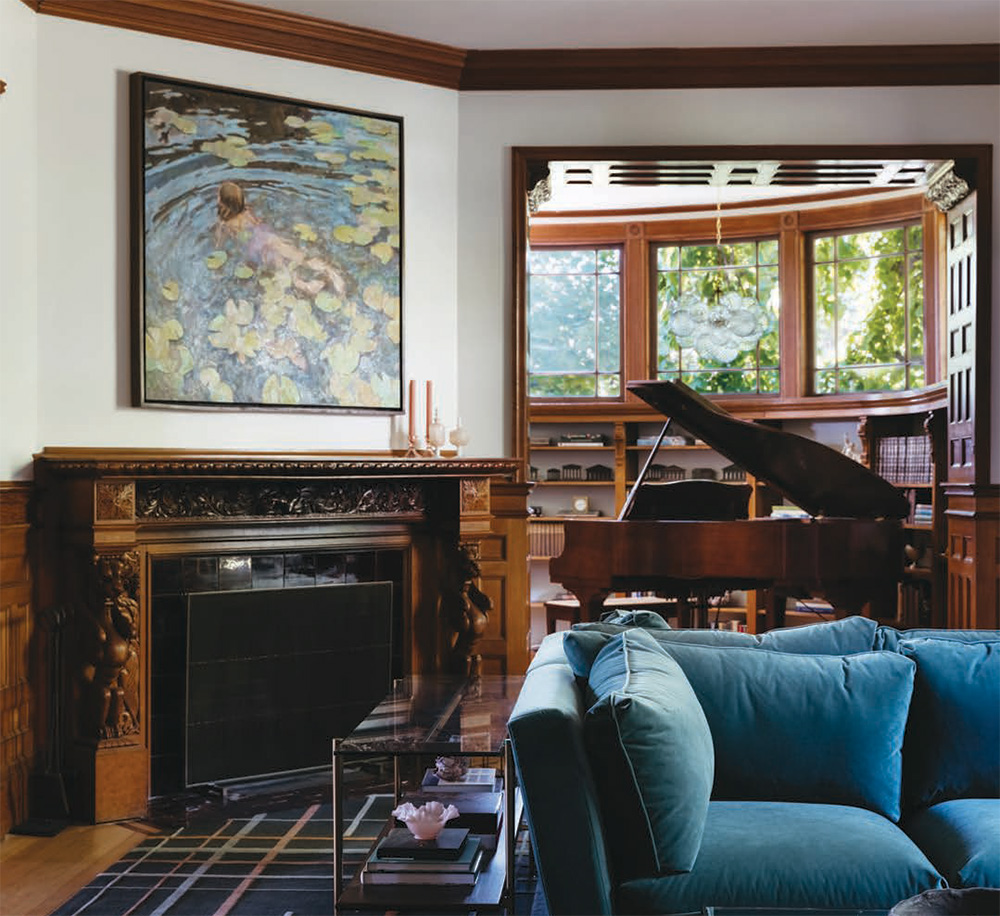
Tims sees this attention to design and detail as inseparable from the guest experience. “The design sets the emotional tone and defines how guests relate to a place,” he says. He balances worldly influences with a strong sense of Maine character, ensuring the inn feels luxurious yet grounded. Every vintage rug, light fixture and piece of art contributes to a narrative that is both curated and lived-in.
Under Tims’s guidance, Norumbega has transformed from merely a restored historic property into a revitalized institution. The restaurant and bar, now fully developed with a full-time chef and beverage director, draw both local and visiting patrons. Seasonal pop-up dinners and curated food events extend the inn’s presence into the community, while weddings, Thanksgiving dinners, and other gatherings reinforce the property’s role as a social hub.
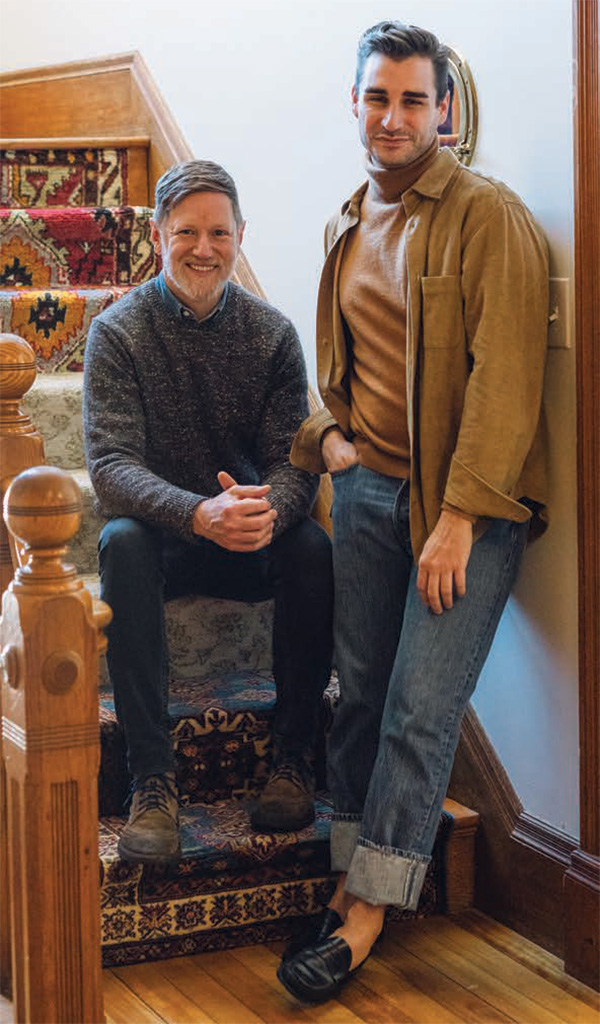
The rebirth and success of the curiosity on Route 1 as The Norumbega Inn is a testament to Tims’s upbringing in Cleveland.
“My parents had always tried to steer us in a practical direction,” he says. “They didn’t want us to go to college and end up not knowing what we were going to do when we got out.” Fortunately, the interest in architecture they instilled in him blossomed, and preserving and reinventing Norumbega is a way of paying it forward.
“They encouraged me to explore architecture, and I just ended up loving it.”